Where things stood
Stock reaches this US bearing and MRO distributor from many unrelated sellers. Most listings carry little more than a product name and a SKU, with no structured dimensions and no bearing type, so every new lot has to be identified and reconciled before it can be listed and priced.
What changed
Claro built a bearing-type classification from the listings themselves, then defined the attributes common to every bearing and the ones specific to each type. It filled those attributes from ranked sources, manufacturer pages first, with marketplace listings ranked lower and never accepted as the only evidence. Every value carries its source and a confidence level, and low-confidence items go to review instead of straight into the catalog.
How the catalog was structured
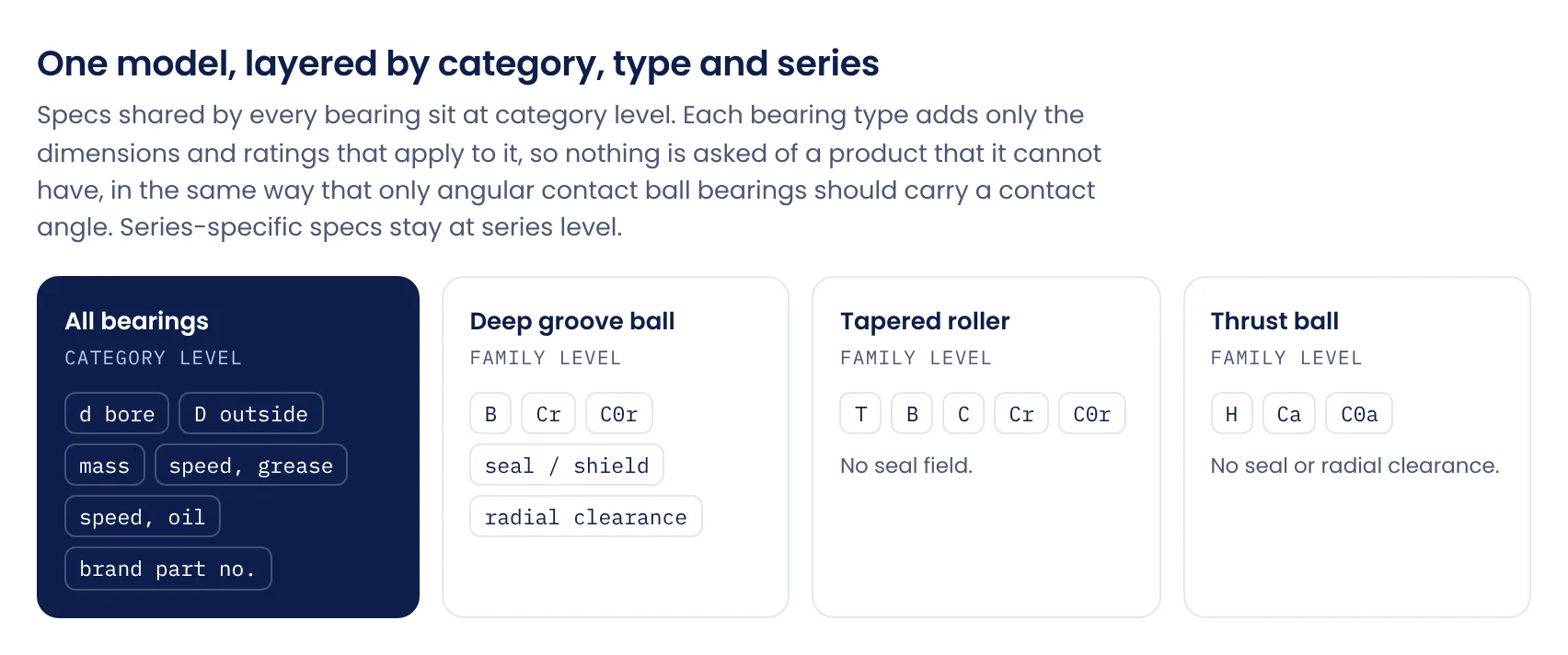
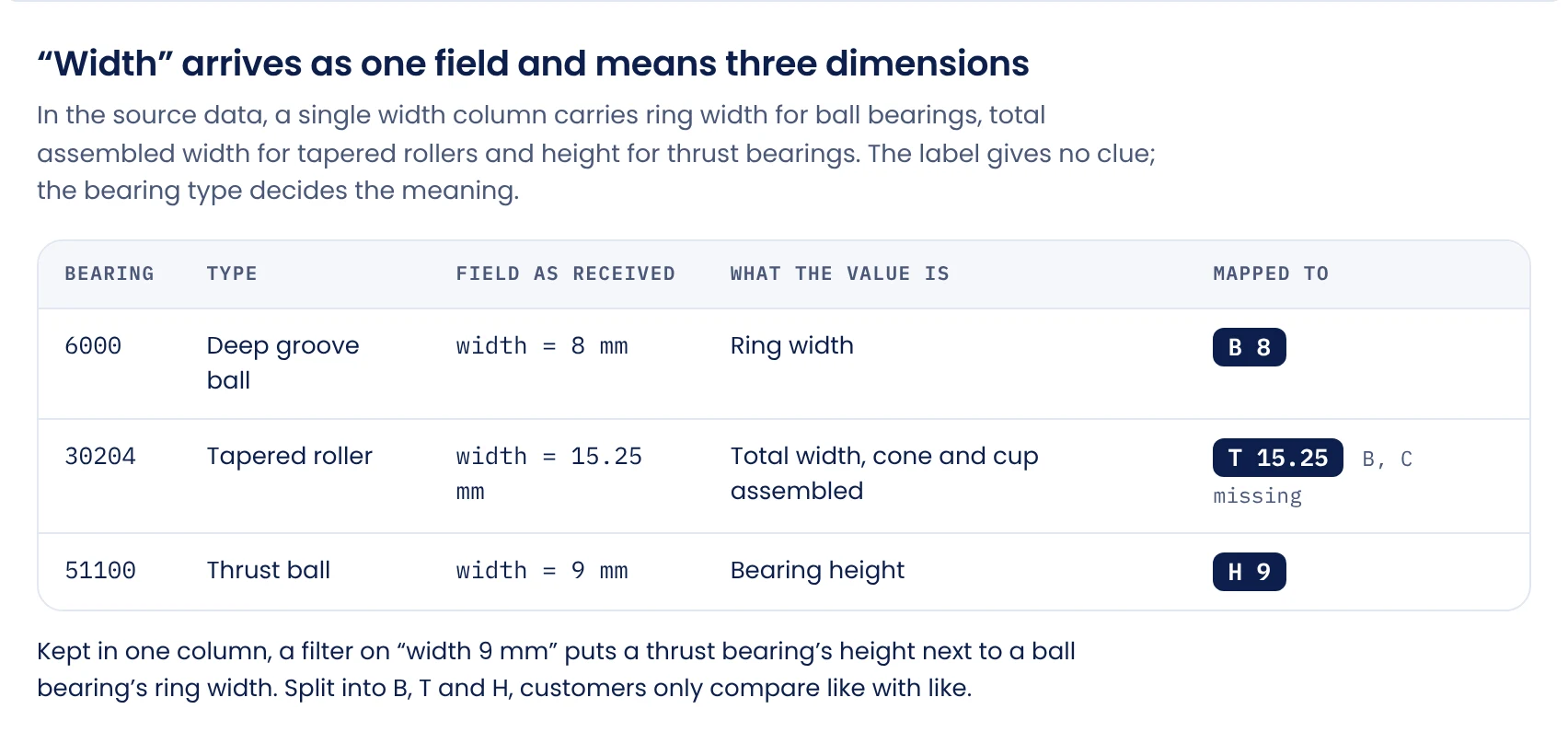
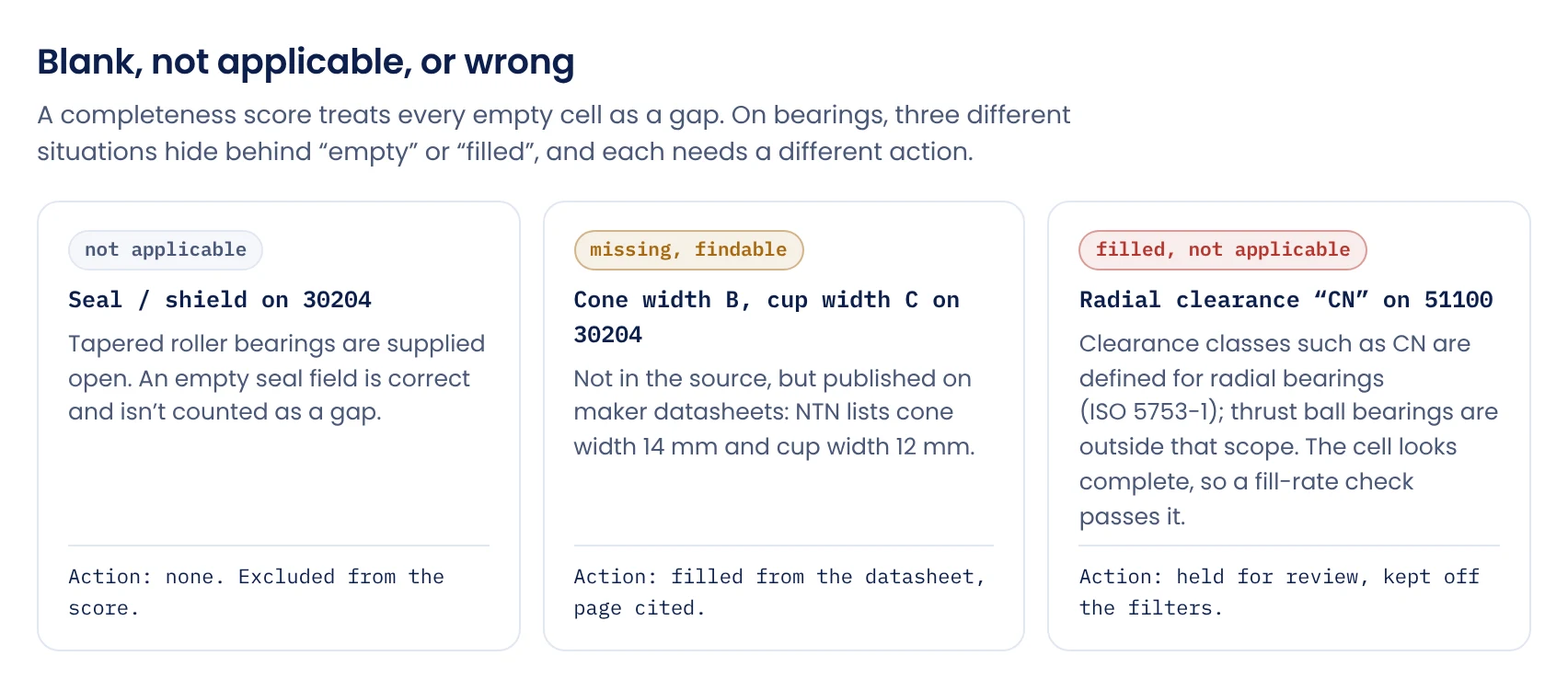
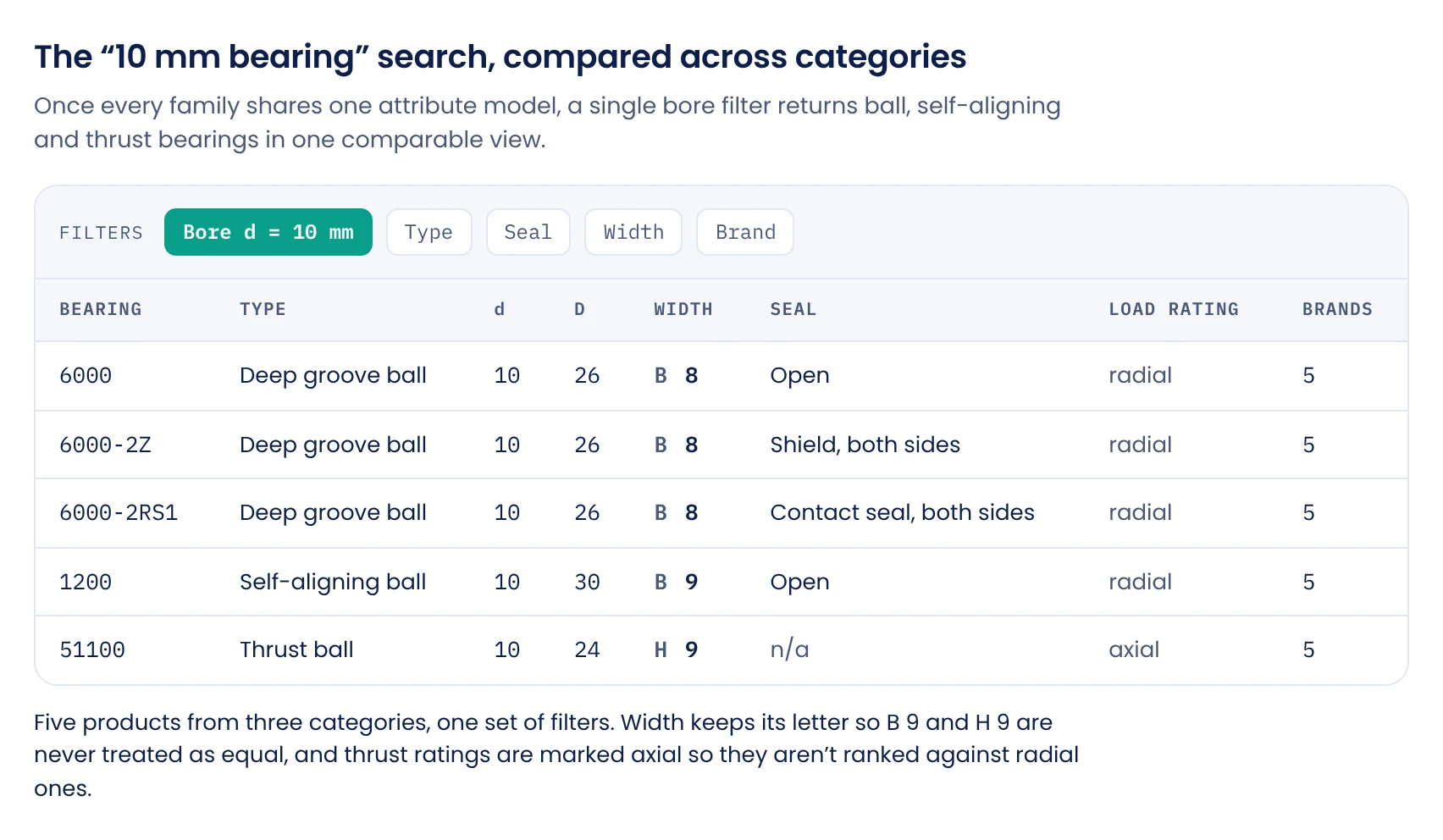
Illustrative examples on standard bearing designations, shown to explain the model. They are not extracts of the customer’s data.
What it looks like today
One attribute model for every bearing family: shared specs at category level, type-specific dimensions and ratings below it.
Fields that mean different things by bearing type, such as width, split into B, T and H so customers only compare like with like.
Every empty cell sorted into not applicable, missing but findable, or filled but not applicable, each with its own action.
A source and a confidence level on every value, with low-confidence items held for review.
On bearings, “empty” and “filled” each hide three different situations. A catalog is only as good as its ability to tell them apart.